
AC Condensate Leak Cleanup: Signs Your Ceiling Leak Is From HVAC
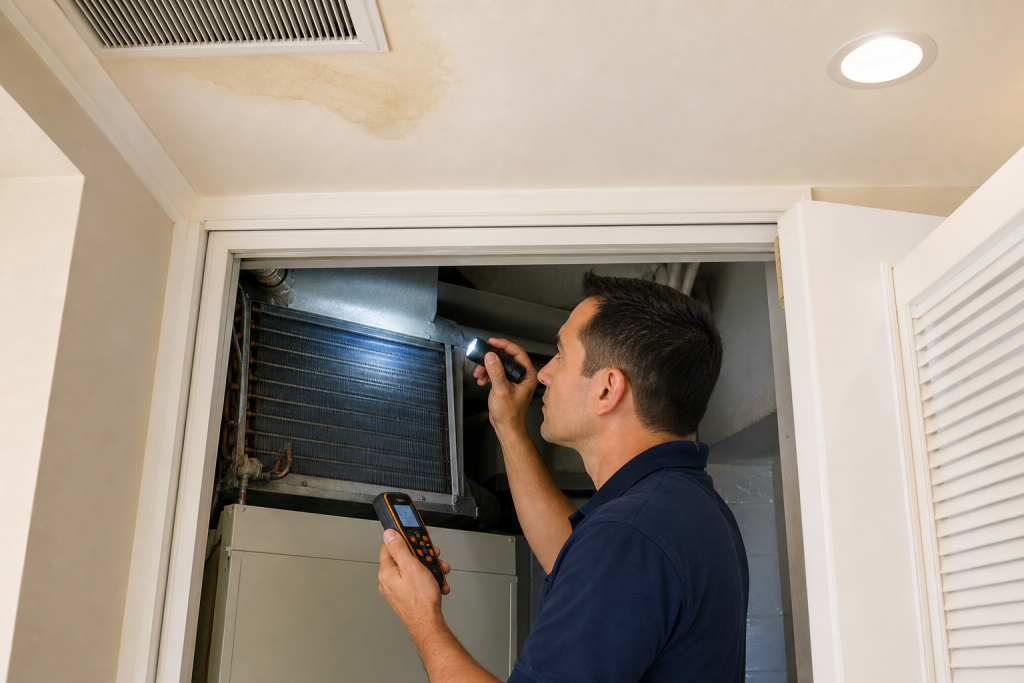
A ceiling leak is not always a roof problem or a plumbing failure. In many Atlanta-area homes and buildings, the source can be the HVAC system, especially when a condensate drain line, drain pan, or nearby coil starts to overflow. Knowing the difference matters because water damage restoration should start with the right source, not a guess.
How an HVAC condensate leak becomes a ceiling stain
Air conditioners pull moisture out of the air as they cool it. That moisture should move into a drain pan and out through a condensate line. When the line clogs, the pan cracks, the unit freezes and thaws, or the system is not draining correctly, water can collect where it should not. If the unit sits above a ceiling, that water may show up as a stain, bubbling paint, or an active drip below.
If the leak is still spreading or the ceiling is sagging, treat it as urgent and use emergency response support rather than waiting to see if it stops on its own.
Signs the ceiling leak is likely from HVAC
The most useful clue is pattern. HVAC-related leaks often follow the cooling cycle, the location of the indoor unit, and the path of the drain line. Look for these common signs:
- The stain is near a vent, attic air handler, or closet unit. Water often follows the easiest path downward, so the visible damage may be below the system rather than under the exact failure point.
- The leak happens when the AC runs. If the drip starts or gets worse during cooling, that is a strong reason to inspect the condensate system.
- The water is clear or lightly tinted instead of dirty or brown. Ceiling materials can discolor over time, so this is not proof by itself, but it can help narrow the source.
- You notice a musty odor, damp insulation, or wet drywall near ducts. Moisture from the unit can settle around surrounding materials even when the stain is small.
- The same ceiling area has leaked before. A repeated leak often points to a drainage issue that was never fully corrected.
When the question is whether the damage is HVAC-related, it helps to compare the symptom to the system. That is one reason homeowners and property managers often start with a ceiling-focused assessment such as ceiling water leak repair instead of assuming the problem is above the roofline.
Common HVAC problems that cause ceiling leaks
A clogged condensate drain line is one of the most common causes. Dust, algae, and debris can slow drainage until the pan overflows. A cracked drain pan can do the same thing, especially if the system has been leaking for a while.
Frozen evaporator coils can also create a confusing pattern. The unit may freeze while running, then thaw later and release extra water all at once. In some systems, a failed float switch or overflow safety device allows the leak to continue longer than it should. In other cases, sweating ductwork creates condensation on cold metal surfaces that drips into ceiling cavities or wall chases.
None of these problems should be ignored just because the water seems clean. When moisture reaches drywall, insulation, framing, or ceiling finishes, the cleanup often needs more than a quick towel dry. If damp materials stay in place, mold can become a concern, which is why mold remediation may be part of the solution after the source is controlled.
What to do before you call for service
Your first goal is to stop the spread and gather enough information to describe the problem clearly. Keep the steps simple and safe.
- Shut off cooling if the leak is active. If you can do so safely, stopping the system may limit additional water production.
- Protect the area below the leak. Use towels, a container, or plastic sheeting to keep the damage from spreading to flooring and fixtures.
- Check whether the leak happens only when the AC runs. That pattern is useful when comparing HVAC issues to roof or plumbing problems.
- Document the damage. Photos help with repair planning, tenant communication, and insurance conversations.
- Avoid opening sealed panels unless you are qualified to do so. HVAC and electrical components can be hazardous, and some inspections are better left to the proper trades.
If you manage a property, this is also a good time to notify the right people and keep the issue from becoming a broader building problem. For practical guidance across cleanup types, Floodmasters also maintains a helpful FAQ and restoration articles resource.
How professionals confirm the source and clean up the damage
A proper water damage restoration visit should do more than dry the visible spot. The source needs to be traced, the affected materials need to be evaluated, and the hidden moisture has to be addressed before repairs begin. That usually means checking the condensate line, drain pan, nearby insulation, ceiling cavity, and any surfaces that may have absorbed water.
From there, the cleanup may include water extraction where needed, controlled drying, removal of damaged drywall or insulation, and treatment of any materials that cannot be dried safely in place. If the ceiling finish is badly affected, a repair plan may move into reconstruction and rebuild services so the area is restored correctly, not just patched over.
For homeowners, this often falls under residential restoration. For offices, retail spaces, medical suites, and other occupied properties, the response needs to work around operations, tenants, and safety concerns, which is where commercial water damage restoration becomes important.
When the leak should be treated as urgent
Some HVAC leaks are small and contained. Others call for faster action. Treat it as urgent if the ceiling is bulging, water is near light fixtures, the leak has reached insulation, the stain keeps growing, or there is any sign the drywall is losing its shape. In those cases, the goal is not to wait and watch; it is to stop further damage and dry the structure properly.
Do not assume that a leak is minor just because the drip rate is slow. Water can follow framing, insulation, and ductwork before it becomes visible, so the area you see on the ceiling may be only part of the problem.
When to call Floodmasters
If you are trying to determine whether your ceiling leak came from HVAC or another source, a focused inspection can save time and reduce avoidable damage. Floodmasters works with property owners who need calm, practical help after water finds its way into the structure. When the issue is active or the source is unclear, contact Floodmasters to request service and discuss the next step.
Whether the job stays limited to cleanup or needs repairs after drying, the important part is to address the moisture early and completely. That is the safest way to protect the ceiling, the system, and the room below it.