
Commercial Water Damage: How to Stay Open During Restoration
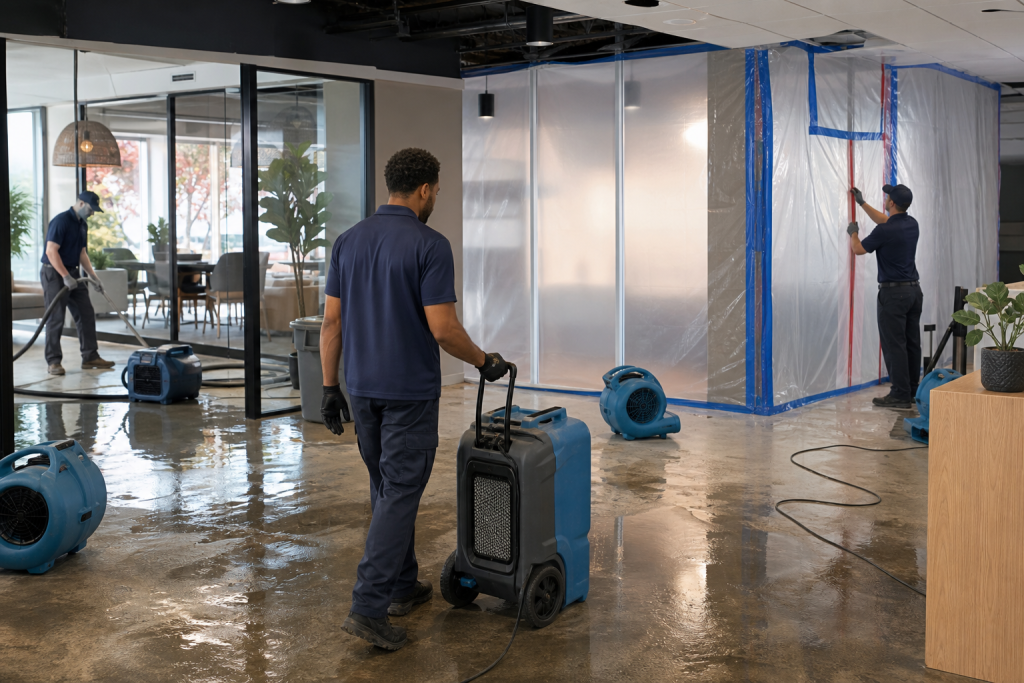
When a leak, burst pipe, or overflow interrupts a workplace, the first question is often whether you can keep business open during water damage restoration. In many cases, the answer depends less on the size of the wet area and more on where the damage is, what was affected, and whether the space can be made safe and usable again.
Start with a practical decision about occupancy
A business can sometimes stay partially open while restoration is underway, but that decision should be based on risk, not optimism. The affected area may be isolated, after-hours work may be possible, and some operations may shift to another part of the building. In other cases, keeping people in the space creates unnecessary exposure to slip hazards, electrical concerns, poor air quality, or contamination.
Before you decide to stay open, ask a few basic questions: Is the water source controlled? Are any ceilings, walls, or floors unstable? Did water reach electrical systems, inventory, or sensitive equipment? Was the loss clean water, or is there a sewage concern? Answers to those questions usually shape the rest of the plan.
The first steps that protect both people and revenue
The first hour matters because it sets the pace for the rest of the project. A fast, organized response does not just limit damage; it also helps you avoid a longer closure than necessary. If the source is still active, coordinate with maintenance or a trusted plumber through plumber support coordination so the leak is stopped before drying and repairs begin.
- Protect people first by restricting access to the wet area and posting clear temporary directions for staff, tenants, and visitors.
- Document the damage with photos and notes before anything is moved, cleaned, or removed.
- Protect inventory, computers, records, and movable equipment by relocating them out of the affected zone.
- Set a temporary traffic pattern so customers and employees can still reach the parts of the building that remain usable.
- Call a commercial restoration team early so drying, containment, and repair planning can happen together.
If you need help quickly, the emergency response service is the right starting point. For larger or more complex losses, Floodmasters’ commercial water damage restoration service can help coordinate the work in a way that supports continued operations when conditions allow.
How restoration is usually sequenced around business hours
One of the best ways to reduce downtime is to separate the work into phases. Some tasks can happen before opening, after closing, or in a contained area with controlled access. That may include water extraction, selective demolition, drying equipment placement, and cleaning around unaffected operations. Other tasks may need to wait until occupancy is reduced.
For example, a restaurant, office suite, retail floor, warehouse, or multi-tenant property may be able to keep part of the space active while a damaged section is stabilized. The key is containment. When barriers are installed correctly and drying equipment is positioned with workflow in mind, the business can often function around the work instead of stopping completely. You can learn more about the broader process through water damage restoration services.
That said, the plan should remain flexible. Hidden moisture can spread behind walls, under flooring, or above ceilings. If conditions change, the safest operational choice may also change. Staying open is useful only when the space remains safe, sanitary, and functional.
When a temporary closure is the safer decision
Some losses are not good candidates for partial operation. A sewage backup, for instance, is different from a clean supply line leak because contamination changes both the cleanup process and the exposure risk. In those cases, the right next step is usually to isolate the area and move people away until the affected materials are properly handled through sewage cleanup.
The same caution applies when water has reached electrical components, structural framing, or ceiling assemblies that may be weakened. If materials stay wet for too long, microbial growth can become a concern, which is one reason prompt drying and source control matter. If odors, discoloration, or wet porous materials are present, it may be wise to limit access until the area is assessed. In some cases, mold remediation becomes part of the plan after the moisture problem is corrected.
A temporary closure is not a failure of planning. It is sometimes the most practical way to protect employees, tenants, customers, and the building itself while the loss is being stabilized.
What to ask before work begins
Clear communication at the start helps avoid surprises later. Before the restoration team begins, ask how the work will be staged and what the business can realistically keep using during each phase.
- Which rooms or work areas can remain open, and which need to be closed off right away?
- How will containment, traffic flow, and access for staff or tenants be handled?
- What parts of the loss require the most urgent drying or demolition?
- How will moisture be checked so reopening decisions are based on conditions, not guesswork?
- If hidden damage appears, what is the plan for repairs and scheduling through reconstruction and rebuild?
These questions help you understand not only the cleanup work, but also the operational impact. That matters for property managers, business owners, and anyone responsible for keeping a building usable while repairs move forward. If you want more background on common service and scheduling questions, the FAQ page is a practical place to start.
How Floodmasters can support a phased recovery
Commercial water damage is easier to manage when the response team understands both the plumbing problem and the business behind it. Floodmasters can coordinate emergency response, drying, cleanup, and rebuild planning so the project moves in a logical order instead of a rushed one. That approach can help reduce confusion for managers, tenants, and staff.
Depending on the loss, the right mix of services may include emergency stabilization, water extraction, sanitation, drying, selective demolition, and later repair work. If the building has multiple trade needs at once, the team can also help coordinate related concerns such as plumbing support or more complex restoration sequencing. You can review service options on the main services page or request help through contact Floodmasters when you are ready for an assessment.
For property teams and business owners, the goal is not just to dry the building. It is to restore safe operations with as little disruption as the loss allows.
Keep the focus on safety, access, and a clear plan
If you are trying to keep business open during water damage restoration, start with the basics: stop the source, isolate the affected area, protect people, and define what can stay operational without adding risk. From there, the restoration plan can be phased around your schedule whenever the building allows it.
When the loss is more than a simple leak, or when you are not sure whether it is safe to stay open, contact Floodmasters for a practical assessment and a next-step plan that fits the conditions on site.