
Roof Leak After a Storm: What to Check First
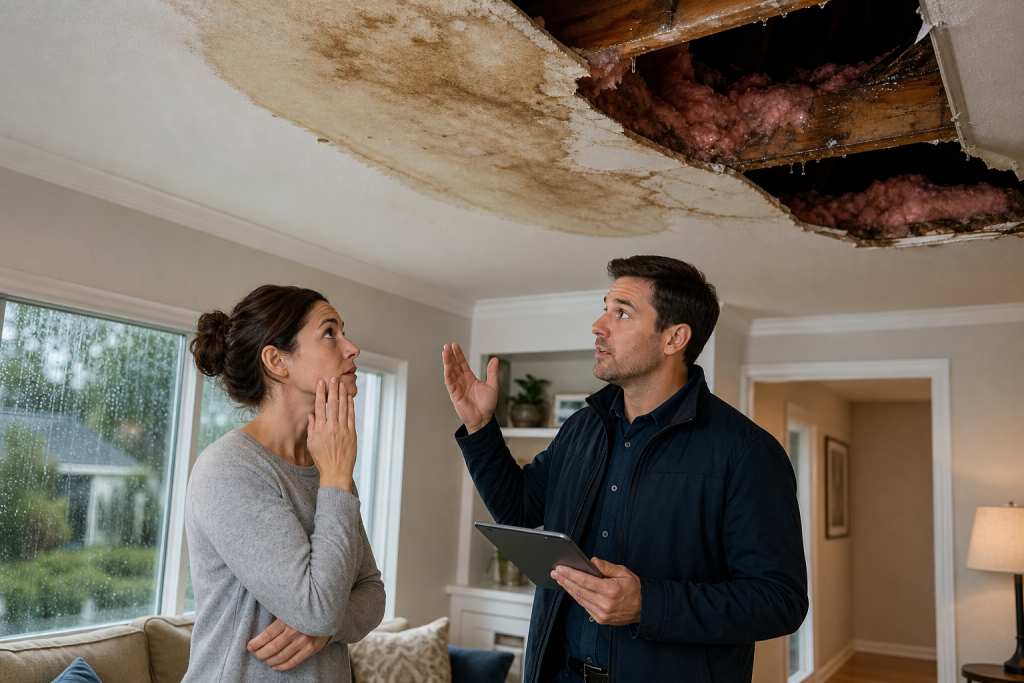
A roof leak after a storm can move from a small stain to hidden water damage quickly, especially if it reaches insulation, drywall, or electrical areas. The first few checks should help you stay safe, limit damage, and decide whether you need emergency help.
Start with safety before you inspect anything
If water is actively entering the home, focus on control and safety before the roof itself. If the leak is near light fixtures, outlets, or a ceiling that is bulging, stay out of the area until it is assessed. Water and electricity do not mix, and a soaked ceiling can fail without much warning.
Move furniture, electronics, rugs, and paper items away from the affected area if you can do so safely. Place buckets or pans to catch drips, then document the damage with photos and short videos. That record can help later, but it should never delay cleanup.
If the storm has also caused flooding, the damage may go beyond the roof and into lower levels or wall cavities. In that case, Floodmasters’ emergency response services can help reduce the chance of secondary damage and give you a clearer plan for next steps.
Check the most likely entry points first
After the storm passes and it is safe to look, start with the simplest possible source points. You do not need to climb onto a wet roof right away. A careful ground-level inspection and a quick attic check often reveal enough to guide the next decision.
What to look for from the ground
- Missing, lifted, or visibly displaced shingles
- Flashing around vents, skylights, chimneys, or roof edges that looks bent or separated
- Debris buildup in gutters or downspouts that could force water back under the roof line
- Branches, impact marks, or torn material after wind or hail
- Water trails on exterior walls or stained soffits near the leak area
These signs do not prove the roof is the only problem, but they can tell you where water may have entered. If damage is obvious from the ground, avoid climbing onto a wet or unstable roof. A roofing contractor may need to secure the opening before restoration begins.
What to look for in the attic
If you can safely access the attic, use a flashlight and look for damp insulation, dark wood stains, wet nail points, or droplets on the underside of the roof deck. Fresh water often leaves a sheen or a darker line on wood. Insulation that is compressed or matted can also point to a leak path.
On the other hand, a leak that appears in one room may travel along framing before it becomes visible. That means the ceiling stain may not sit directly under the roof opening. If you want a more detailed read on how water can show up inside the structure, this guide to ceiling water leak repair can help you understand what the signs often mean.
Decide whether the problem is limited or already spreading
A single drip does not always mean a small problem. Storm-driven water can travel inside insulation, wall cavities, and ceiling assemblies before it appears on the surface. The real question is not only where you see water, but how far it may have moved.
If you see the stain growing, the ceiling sagging, paint bubbling, or drywall softening, the damage may be active and progressing. If the leak returned after the storm ended or reappears when wind picks up, that is another clue that the roof assembly still has an opening.
When storm water reaches a basement, lower wall, or utility area, a separate cleanup plan may be needed because the entry path may no longer be limited to the roof. Floodmasters’ wet basement after storm cleanup guide can help if the problem is affecting more than one level of the property.
Document the damage without slowing down response
Good documentation is useful, but the goal is to support repair and restoration, not to let moisture sit for hours while you gather photos. Take a few wide shots of the room, then close-up images of stains, buckled flooring, wet insulation, damaged belongings, and the outside area where the storm likely entered.
If you are a property manager or business owner, save notes on when the leak was first noticed, which units or rooms are affected, and whether the water is still active. That information can help a restoration team prioritize containment and drying. You can also use Floodmasters’ frequently asked questions page to better understand common restoration concerns before you call.
When the roof leak is more than a roof problem
Some post-storm leaks look like roofing issues but turn out to involve another system. For example, an interior stain near plumbing lines, a leak around a water heater, or damage near a bathroom can overlap with storm concerns and complicate the diagnosis. If the wet area is tied to a plumbing fixture or appliance, it may need a different response path in addition to roof repair. Floodmasters also offers plumbing partner support when coordination is needed.
A storm can also drive moisture into materials that stay wet long enough to create a mold concern. You do not need to assume mold is present, but you should take the risk seriously if drywall, carpet pad, or insulation has stayed damp. If that happens, review mold remediation services as part of the broader plan.
Signs you should request water damage restoration now
It is usually time to call for professional help when the leak is active, the damage is spreading, or the affected materials are difficult to dry safely on your own. A roofing repair stops the entry point, but restoration addresses the water already inside the structure.
Request water damage restoration if you notice any of the following:
- A ceiling is sagging, bulging, or cracking
- Water has reached insulation, drywall, or subflooring
- The leak is affecting multiple rooms or multiple units
- There is electrical risk or moisture near fixtures, panels, or outlets
- You can still feel dampness or smell persistent mustiness after the storm
For situations like these, water damage restoration services are often the right next step. If the situation is urgent or the loss is expanding, contact Floodmasters to request service and get the issue evaluated promptly.
What professional cleanup can include after a storm leak
A qualified restoration response usually starts with inspection and moisture assessment, then moves into containment, extraction, drying, and monitoring of affected materials. Depending on the extent of the leak, the work may also include removing damaged drywall or insulation, treating affected areas, and coordinating rebuild needs after the structure is dry.
That matters because a roof leak is rarely just a roof leak once water gets inside. A small opening can affect finishes, framing, electrical safety, and occupant comfort. If business operations, tenant access, or habitability are being affected, Floodmasters can also support commercial water damage restoration and residential restoration depending on the property type.
If repairs go beyond drying and cleanup, the next phase may require reconstruction and rebuild services so the property can be returned to a safe, usable condition.
How to move forward after the first inspection
Once you have confirmed the leak source as best you can, your next step is straightforward: stop more water from entering, document the loss, and bring in the right help before hidden damage spreads. In many cases, that means pairing roof repair with moisture cleanup and damage restoration rather than treating the problem as a simple patch job.
If you are dealing with a storm leak in Atlanta or a nearby service area, Floodmasters can help you sort out the next step and coordinate a response that fits the damage in front of you. Start with the basics, stay safe, and review Floodmasters’ services if you need support beyond the initial inspection.
Bottom line: check for safety issues, look for the most likely leak path, and act quickly if water has reached building materials. A prompt response can limit the scope of repairs and make the rest of the cleanup much more manageable.