
Mold Inspection vs. Mold Testing: Which Do You Need in Atlanta?
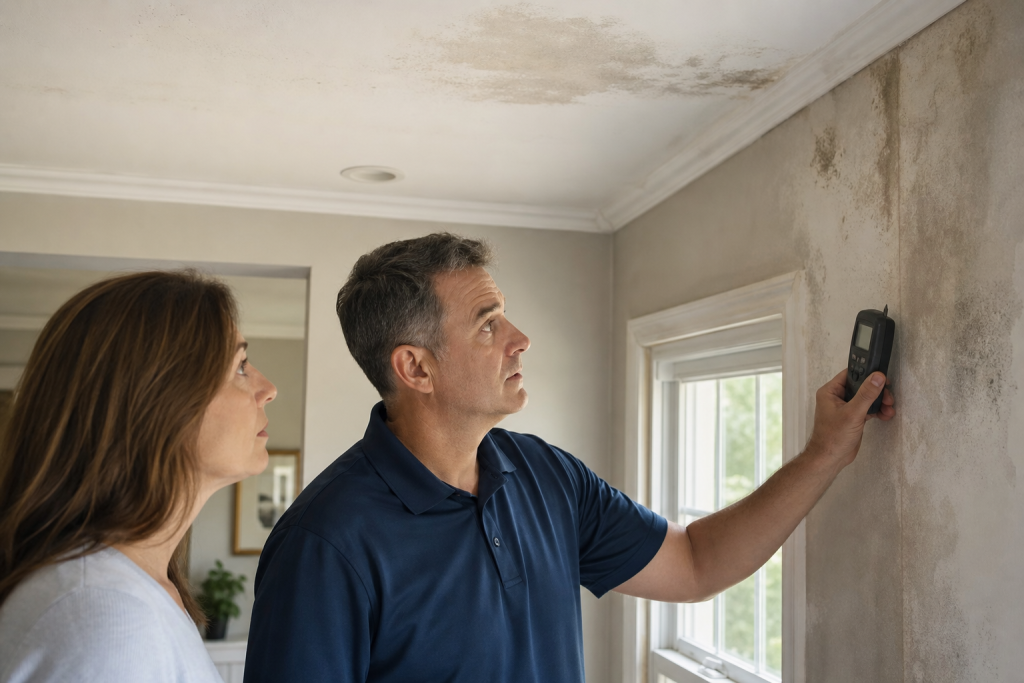
When you suspect mold, the first question is not always whether to test. In many cases, the better first step is a mold inspection that looks for the moisture source, visible growth, and damage that may be hidden behind finishes. In Atlanta, where humidity and storm-related leaks can keep building materials damp, choosing the right starting point can save time and help you focus on the real problem. Floodmasters can help with water damage restoration and emergency response when the issue starts with a leak or overflow.
Mold inspection and mold testing are not the same
A mold inspection is the field-side assessment. It looks at where moisture has traveled, whether there are visible signs of growth, whether materials were exposed to water long enough to support mold, and whether the problem may be active or hidden. Mold testing is a sampling step. Air or surface samples are collected and then analyzed to give more information about what is present in the sample.
The key point is that each one answers a different question. Inspection helps identify the likely problem and the building conditions behind it. Testing can add detail, but it does not replace the need to find and fix the moisture source. If a wall, ceiling, crawlspace, or cabinet stayed wet, the building still needs a restoration plan before any report is truly useful.
When a mold inspection is usually the right first step
For most homeowners, property managers, and business owners, mold inspection is the practical starting point whenever there is a known water event or a visible change in the building. It is especially useful when the goal is to understand what happened, how far the damage spread, and whether cleanup or removal is needed.
- You can see staining, warping, or fuzzy growth on walls, ceilings, trim, or flooring.
- There is a musty odor after a leak, overflow, or storm.
- A ceiling, wall, crawlspace, or basement stayed wet for more than a short time.
- Drying was delayed, or water reached materials that are hard to dry completely.
- You need to know whether the issue seems active, hidden, or limited to one area.
If the problem followed a broken line, overflow, or roof leak, it usually makes sense to start with the water source and affected materials first. That may mean reviewing burst pipe water damage cleanup, ceiling water leak repair, or a wet basement after storm cleanup plan before spending time and money on samples.
When mold testing adds value
Mold testing can be helpful when the situation is less clear. For example, there may be a persistent moldy odor without obvious visible growth, or several occupants may be noticing a problem that is hard to localize. Testing can also help when a property manager or owner wants documentation before and after a cleanup project, or when different parts of a building may be affected in different ways.
It can be a reasonable add-on when the inspection raises questions that cannot be answered by sight and moisture findings alone. If you are trying to decide what a report means or when testing is worth the cost, our FAQ page is a useful place to start.
What mold testing can and cannot tell you
Testing is a snapshot of the samples taken at a specific time and place. Airflow, weather, HVAC operation, occupancy, and where the sample was collected can all affect the result. That is one reason testing should be interpreted carefully and in context, not treated like a stand-alone verdict about the whole building.
Testing may help identify what was captured in the sample, but it does not tell you where the water entered, how long materials were wet, or how far hidden damage extends inside a wall, ceiling, or subfloor. It also does not dry the structure, remove damaged materials, or correct the source of the problem. Those are restoration tasks, and they matter just as much as any report.
How to decide between inspection and testing
If you are still choosing between the two, use the problem itself as your guide. In many cases, the simplest option is the one that gives you the clearest next step.
- Start with inspection if there is a leak, stain, smell, or visible growth.
- Consider testing if the odor continues but the source is not obvious.
- Use both if several rooms or units appear affected and documentation matters.
- Consider targeted post-remediation testing if a cleanup project needs verification.
- For occupied homes and multi-unit properties, choose the option that helps you act on the moisture problem first.
For occupied homes, residential restoration is often the right framework for handling the building damage around the mold concern. For offices, common areas, retail spaces, warehouses, and other managed properties, commercial water damage restoration may be the more relevant starting point.
Why moisture control comes first
Mold does not happen in a vacuum. It follows moisture, so the priority is always to stop the water, dry the affected area, and remove materials that cannot be reliably restored. That is especially important in Atlanta, where humidity can keep damp materials from drying quickly and a small unresolved leak can turn into a larger cleanup problem.
If the source is still active, mold decisions can wait until the structure is stable. A water heater leak cleanup, for example, should begin with controlling the leak and drying the area before anyone assumes the problem is only cosmetic. The same logic applies to plumbing failures, roof leaks, and storm-related seepage: fix the moisture path first, then evaluate the mold risk.
How Floodmasters can help
Floodmasters can help you move from uncertainty to a practical plan. That may include identifying the moisture source, drying the structure, removing damaged materials, and coordinating mold remediation when the situation calls for it. If demolition exposes materials that need to be put back, the next step may include repair and rebuilding so the space is safe to use again.
If you need help deciding whether your situation calls for an inspection, testing, or restoration work, contact Floodmasters. A conversation with a restoration team can help you choose the right next step without overbuying services you do not need.
Conclusion
In the mold inspection vs mold testing Atlanta decision, inspection is usually the best first move when there is visible damage, a leak history, or a clear moisture problem. Testing can add value when the picture is less clear or when documentation matters, but it works best alongside a careful inspection and source control. Start with the moisture problem, then choose the level of assessment that matches the situation.